Amidst the COVID-19 pandemic, lockdowns and social distancing measures led many individuals to spend more time at home. Consequently, there was a surge in interest towards companion animals, particularly psittacine birds. Parrots, in particular, gained popularity due to their vibrant plumage, intelligence, and ability to mimic human speech and sounds. The extended time spent at home provided people with the chance to form deeper bonds with their parrots. Nevertheless, it’s crucial to recognize that parrots have long lifespans and demand substantial commitment in terms of care, attention, and appropriate housing.
The Monitoring and Surveillance Center for Zoonotic Diseases in Wildlife and Exotic Animals (MoZWE) plays a vital role in diagnosing infectious diseases in psittacine birds and monitoring the health of companion birds in Thailand. With the rising number of companion birds in the country, the risk of disease outbreaks within this population also escalates. MoZWE conducts regular monitoring and surveillance, focusing on over 80 psittacine bird species. Among these, three viruses [Avian bornavirus (ABV), Psittacine beak and feather virus (PBFDV), and Avian polyomavirus (APV)] are particularly life-threatening.
Figure 1 and Table 1 show the five-year prevalence of these viruses from January 2019 to September 2023. The number of samples tested increased tenfold after 2019, likely due to lockdowns. PBFDV and APV prevalence stayed stable with no significant changes. ABV prevalence rose, indicating it may be spreading more widely among companion birds in Thailand.
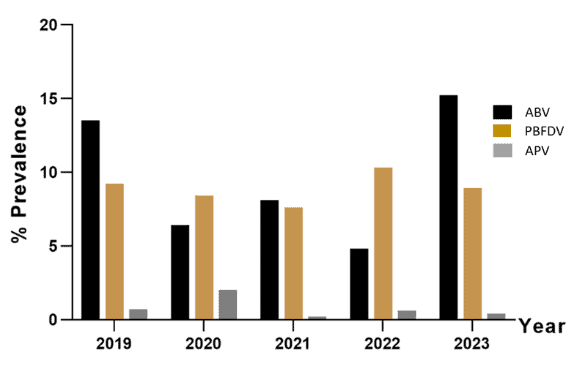
Figure 1 Prevalences of three viruses affecting psittacine birds from 2019 to 2023, namely Avian bornavirus (ABV), Psittacine beak and feather virus (PBFDV), and Avian polyomavirus (APV)
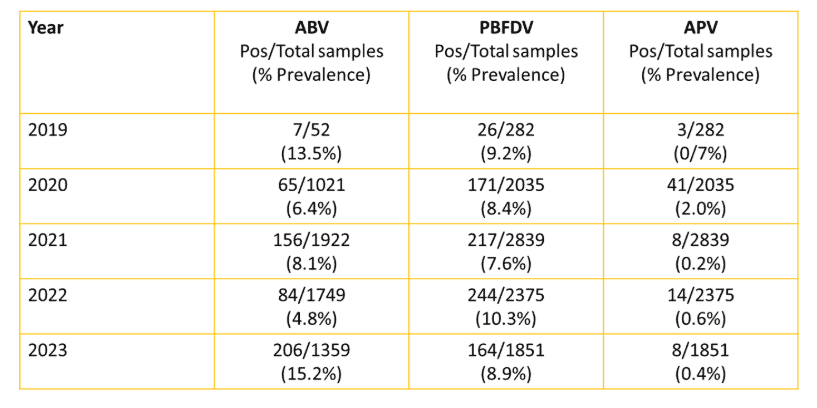
Table 1 Temporal distribution of the prevalence of three visuses affecting sittacine birds from 2019 to 2023, namely Avian bornavirus (ABV), Psittacine beak and feather virus (PBFDV), and Avian polyomavirus (APV)
To curb disease spread, implement strict biosecurity measures in your aviary. Screen all new birds for viruses, even if healthy, prioritize early detection. Ensure you fully understand the long-term commitment and associated disease risks. Commit to regular monitoring and strong biosecurity protocols, including routine virus testing, which are indispensable for ensuring the health and well-being of these birds. Taking proactive measures in testing and staying vigilant about your birds’ health can significantly help maintain a healthy, disease-free aviary.
Further reading
Saechin, A., Sedwisai, P., Mongkolphan, C., Boonyarittichaikij, R., & Tangsudjai, S. (2026). Temporal patterns, co-infections, and risk factors of PaBV, BFDV, and APV in pet psittacine birds traded in Thailand. Veterinary journal, 315, 106562. https://doi.org/10.1016/j.tvjl.2026.106562
Photo by CHUTTERSNAP on Unsplash